
In today’s hyper-connected world, embedded systems are everywhere—inside your smart home devices, cars, medical equipment, and even industrial automation systems. At the heart of these embedded systems lies firmware, the specialized software that brings hardware to life. But as applications become increasingly complex and time-sensitive, using a Real-Time Operating System in embedded firmware development is no longer optional—it’s critical.
At Mettler Design, we empower startups and hardware innovators to build smarter products. By integrating RTOS into embedded systems, we help ensure your product performs with reliability, efficiency, and precision.
What is a Real-Time Operating System (RTOS)?
A Real-Time Operating System (RTOS) is a specialized OS designed to manage tasks that must be completed within strict time constraints. Unlike general-purpose operating systems like Windows or Linux, RTOS guarantees deterministic task execution—meaning tasks are performed in a predictable, timely manner.
Key Characteristics of RTOS:
- Deterministic Scheduling: Executes tasks within specific time limits.
- Multitasking Support: Manages multiple processes simultaneously.
- Priority-Based Execution: Ensures high-priority tasks run first.
- Efficient Resource Allocation: Optimizes CPU, memory, and power usage.
- Low Latency: Ideal for systems where even milliseconds matter.
Why Use a Real-Time Operating System in Embedded Firmware Development?
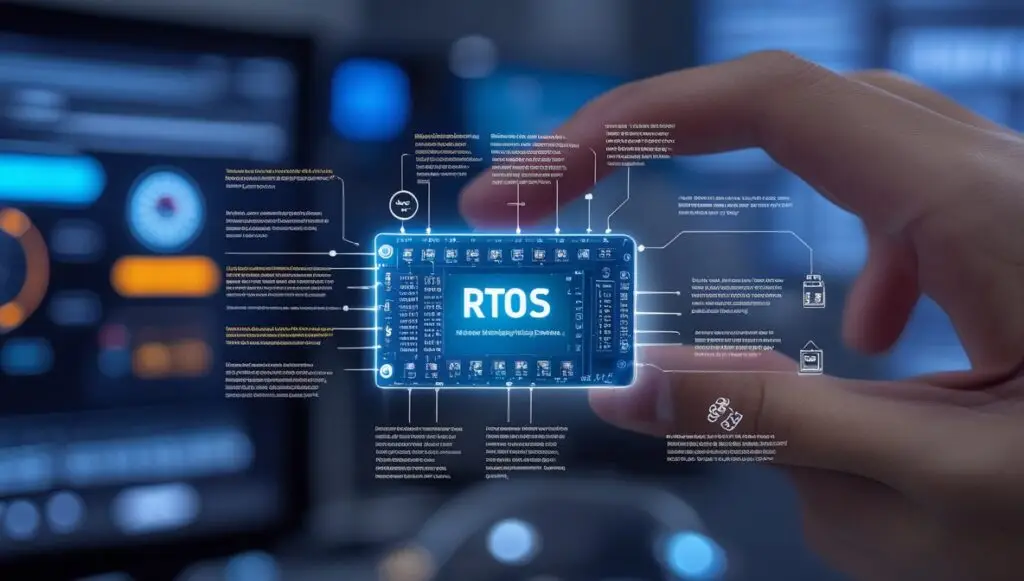
For embedded devices, delays can mean failure. Whether you’re designing a medical monitoring device or an automotive safety system, precision and responsiveness are non-negotiable. Here’s why RTOS is essential:
Deterministic Task Scheduling
Guarantees that high-priority tasks are executed within a defined time frame, eliminating unpredictable delays.
Efficient Multitasking
RTOS handles multiple concurrent operations without overloading the CPU or causing memory bottlenecks.
Real-Time Constraints
From robotics to aerospace, many industries demand strict timing and predictability—areas where RTOS excels.
Scalable & Modular
RTOS is designed to scale with your application. You can add or remove modules without overhauling your entire architecture.
Optimized Resource Management
In resource-constrained environments, RTOS helps balance memory and processing demands intelligently.
RTOS vs General-Purpose Operating Systems
| Feature | RTOS | General-Purpose OS |
|---|---|---|
| Task Execution | Deterministic | Variable and unpredictable |
| Scheduling | Priority-based (preemptive) | Time-sharing or batch-based |
| Response Time | Real-time (guaranteed) | Depends on system load |
| Resource Focus | Efficiency | Throughput |
| Use Cases | Embedded systems, IoT, automotive | PCs, servers, consumer devices |
If your application can’t afford delays or instability, using a Real-Time Operating System in embedded firmware development is a must.
Types of RTOS and Their Use Cases
1. Hard Real-Time RTOS
- Description: Deadlines are absolute.
- Use Cases: Medical devices, aviation control systems, military defense systems.
- Failure Impact: Catastrophic if deadlines are missed.
2. Soft Real-Time RTOS
- Description: Deadlines are important but not mission-critical.
- Use Cases: Media players, telecommunications, industrial automation.
3. Firm Real-Time RTOS
- Description: Occasional deadline misses are tolerable, but consistent misses degrade performance.
- Use Cases: Cloud-based financial systems, some e-commerce platforms.
Benefits of FreeRTOS for Embedded Systems
FreeRTOS is one of the most popular open-source RTOS options, especially favored by startups and small device developers.
Why FreeRTOS?
- Free and Open-Source: No licensing fees.
- Lightweight: Minimal footprint, ideal for microcontrollers.
- Highly Portable: Compatible with most architectures.
- Modular Design: Include only what you need.
- Strong Community Support: Active forums, robust documentation.
- Security Ready: Includes kernel isolation and privilege management.
Mettler Design regularly integrates FreeRTOS into client projects for its balance of performance, cost-efficiency, and scalability.
Challenges in RTOS Implementation (And How to Overcome Them)
Even though RTOS offers many advantages, developers must be aware of potential pitfalls:
1. Complex Debugging
With multiple tasks running concurrently, identifying bugs can be tricky.
Solution: Use trace analyzers, real-time debuggers, and simulators.
2. Memory Management
Improper memory allocation may lead to fragmentation or crashes.
Solution: Optimize stack/heap allocation; monitor usage consistently.
3. Priority Inversion
Low-priority tasks blocking high-priority ones can hurt performance.
Solution: Use priority inheritance protocols.
4. Interrupt Handling
Unoptimized interrupt routines can cause instability.
Solution: Keep ISRs short and efficient.
5. System Overhead
RTOS introduces context-switching overhead.
Solution: Balance performance with minimal task switching.
How to Use RTOS in Embedded Firmware Development
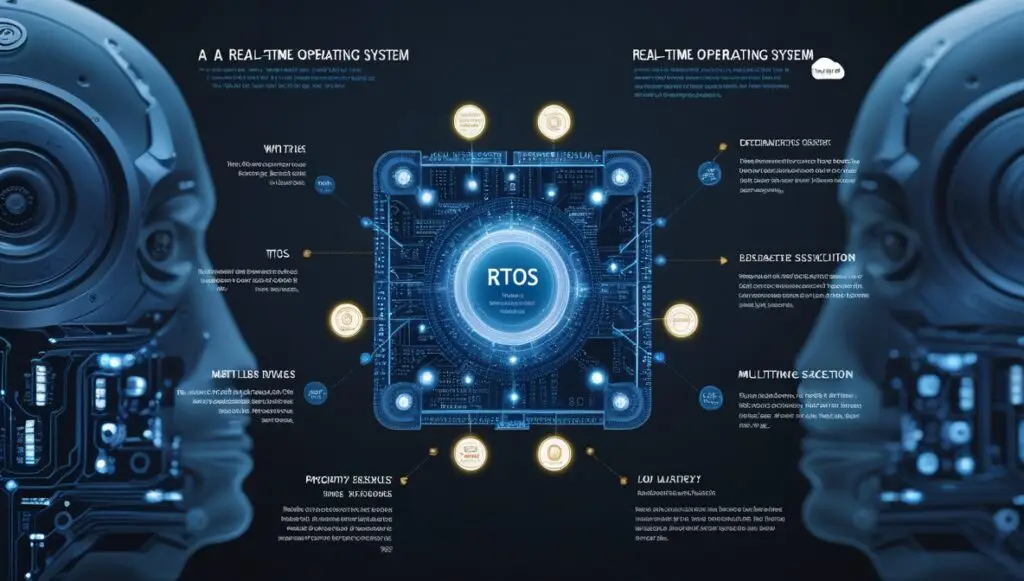
At Mettler Design, we follow a structured, tested approach to implementing RTOS in embedded systems:
1. Select the Right RTOS
Consider hardware compatibility, licensing, real-time requirements, and scalability.
2. Configure the Kernel
Define system parameters like tick rate, memory size, and scheduling policies.
3. Create and Prioritize Tasks
Design tasks for different functionalities and assign appropriate priorities using xTaskCreate() or equivalent.
4. Set Up Synchronization
Use semaphores, mutexes, and queues to prevent race conditions and data corruption.
5. Optimize Resources
Trim unnecessary features, manage memory efficiently, and minimize task count.
6. Debug and Test
Run stress tests, simulate high loads, and track real-time performance.
7. Deploy and Monitor
Deploy firmware on target hardware and monitor KPIs such as latency, CPU usage, and response time.
Real-World Impact: Why Mettler Design Chooses RTOS
At Mettler Design, we understand that embedded firmware is the backbone of modern products. RTOS gives our clients a competitive edge by ensuring:
- Faster boot times
- Real-time responsiveness
- Reliable multi-tasking
- Greater system uptime
- Better hardware efficiency
Whether you’re building the next-gen wearable, smart medical device, or industrial automation system, we can help you leverage RTOS for superior performance and scalability.
Conclusion
Choosing a Real-Time Operating System in embedded firmware development is a critical step toward creating robust, high-performance, and time-sensitive products. From deterministic task execution to efficient resource management, RTOS offers the tools startups need to innovate quickly and confidently.
However, successful implementation requires careful planning, skilled development, and deep technical understanding. That’s where Mettler Design comes in.
Ready to Integrate RTOS into Your Product?
Contact Mettler Design to talk to our embedded systems experts and get started on building a faster, smarter, and more reliable product today.
