
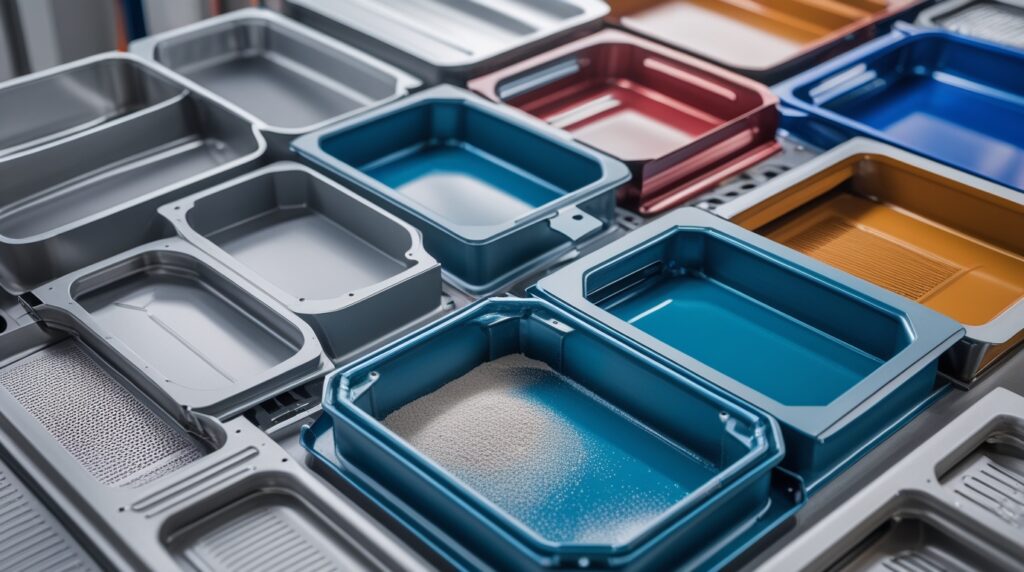
When engineers, product developers, and manufacturers need a durable, stunning finish for metal parts, they consistently turn to powder-coat finishing. At Mettler Design, we help clients elevate their sheet metal products with finishes that not only look exceptional but also perform reliably in demanding environments. Consequently, powder coating remains one of the most popular finishing solutions.
Below, we break down everything you need to know about powder-coat finishing for custom metal parts, including process details, material types, textures, graphics, and ideal use cases.
How Powder Coating Works
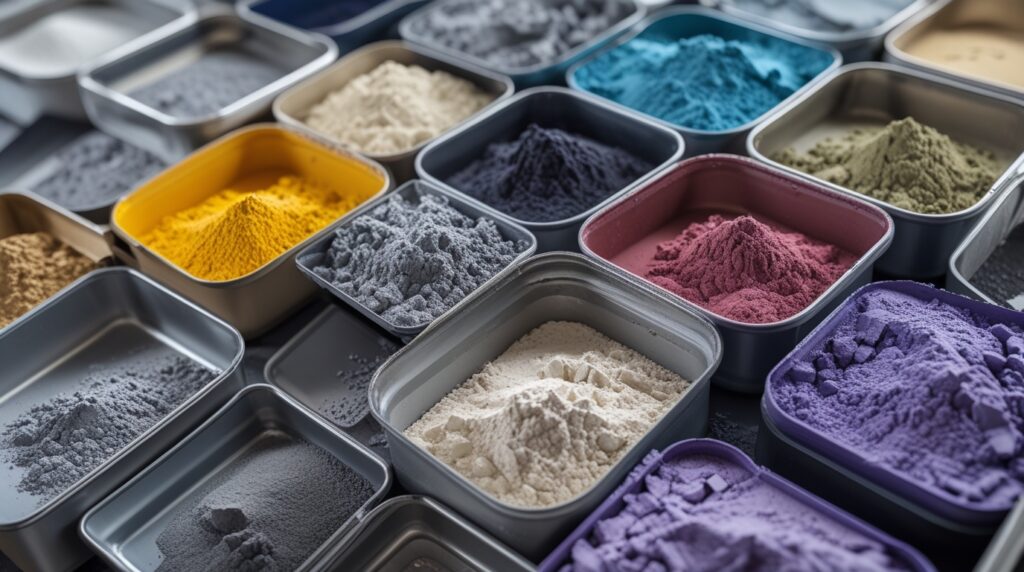
Although powder coating functions similarly to traditional painting, the material itself differs significantly. Instead of liquid paint, a free-flowing dry powder is electrostatically applied to the part. Then, the coated part cures in a high-temperature industrial oven. This results in a tougher, more uniform, and far more durable finish—ideal for precision sheet metal enclosures and fabricated components.
Polyester vs Epoxy Powdercoat: Which One Should You Choose?
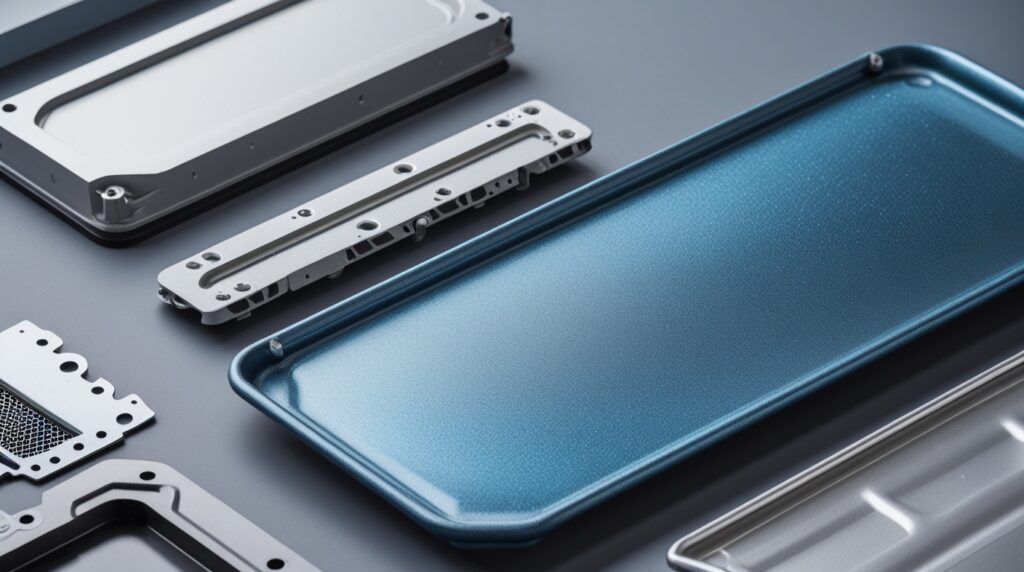
Polyester Powdercoat
Polyester offers excellent impact resistance, mechanical strength, and chemical durability. Because of its flexibility and low cure temperature, it works incredibly well on sensitive components. Additionally, it provides around 1–3 years of UV resistance, making it suitable for light outdoor applications and long-term indoor use.
Epoxy Powdercoat
Epoxy coatings excel in corrosion protection and chemical resistance. If your part will face harsh environments, this becomes a top choice. However, epoxy does not tolerate UV exposure well and fades rapidly outdoors. Therefore, it’s ideal for indoor or controlled environments only.
Understanding Powdercoat Reflectivity
Reflectivity plays a major role in the appearance and durability of your finish. For instance:
| Powdercoat Type | Reflectivity Level |
|---|---|
| High Gloss | >85% |
| Gloss | 70–85% |
| Semi-Gloss | 35–70% |
| Low Gloss | 20–35% |
| Flat | 15–20% |
| Matte | <15% |
As reflectivity decreases, durability typically increases. For example, matte and flat finishes resist fingerprints better and withstand light impacts more effectively. Meanwhile, glossy finishes offer brilliant color but show blemishes more easily.
Sandtex: The Most Durable Texture Option
Sandtex finishes contain insoluble additives that create a rugged, textured surface. As a result, they deliver outstanding impact resistance, slip resistance, and fingerprint masking. Sandtex finishes also hide minor imperfections exceptionally well, making them ideal for welded enclosures.
Choosing the Right Graphics Method
Because different textures interact differently with ink, the graphic application method matters:
- Sandtex finishes → Use digital printing for optimal ink adhesion
- Gloss or matte finishes → Use silkscreening for crisp, smooth graphics
This ensures your branding, labels, or decorative elements stay sharp and durable.
Use Cases: Which Powdercoat Is Right for Your Project?
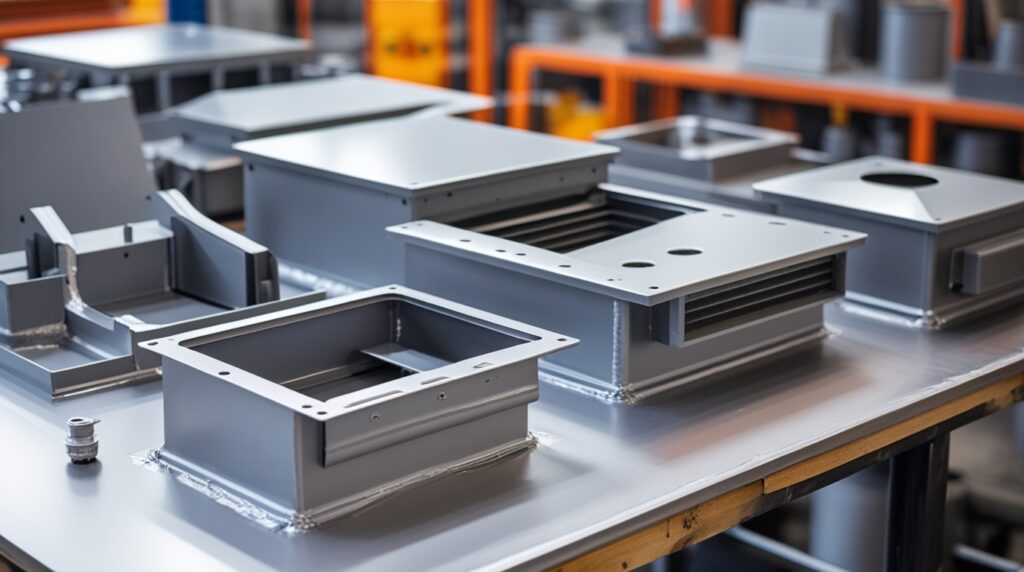
Choosing the correct powder coat depends on your environment and performance needs:
- Outdoors → Polyester or Sandtex
- Corrosive environments → Epoxy
- High-visibility consumer products → Gloss or semi-gloss
- Rugged industrial components → Matte, flat, or Sandtex
At Mettler Design, we guide clients toward finishes that balance aesthetics, durability, and functionality.
Don’t Forget Powdercoat Tolerances
Powdercoat adds approximately 0.003″ (0.08 mm) per side. Therefore, if a component requires a 1-inch hole, you should specify 1.006 inches before coating. Accurate tolerances ensure perfect fits and smooth assembly.
Conclusion
Powder-coated finishing offers a powerful combination of durability, color flexibility, cost efficiency, and visual appeal. Whether you’re producing custom enclosures, precision brackets, or fabricated panels, powder coating provides a reliable, professional finish that stands out.
At Mettler Design, we help you select and apply the ideal powder-coat finish to enhance performance, longevity, and product value.
