
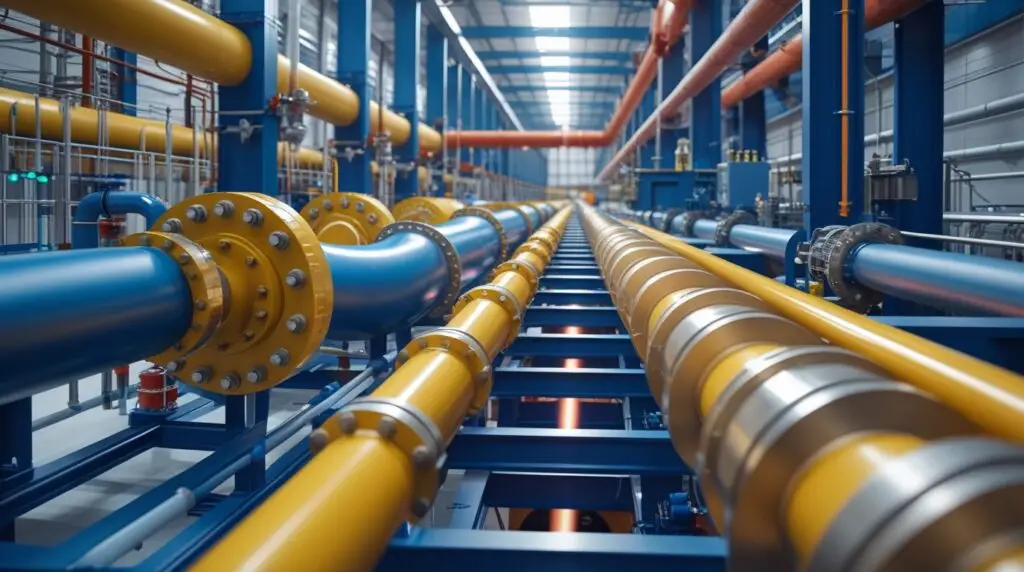
In industries like oil and gas, efficient pipeline design for two-phase flow systems is crucial for maintaining safe, reliable, and cost-effective operations. Two-phase flow involves the simultaneous movement of gas and liquid, or liquid and solid, within a pipeline—creating complex flow dynamics that require deep expertise in fluid mechanics, thermodynamics, and piping engineering.
At Mettler Design, we leverage cutting-edge CAD modeling, simulation tools, and engineering best practices to create optimized, durable, and high-performance two-phase flow systems.
Understanding Two-Phase Heat Transfer in Pipeline Design
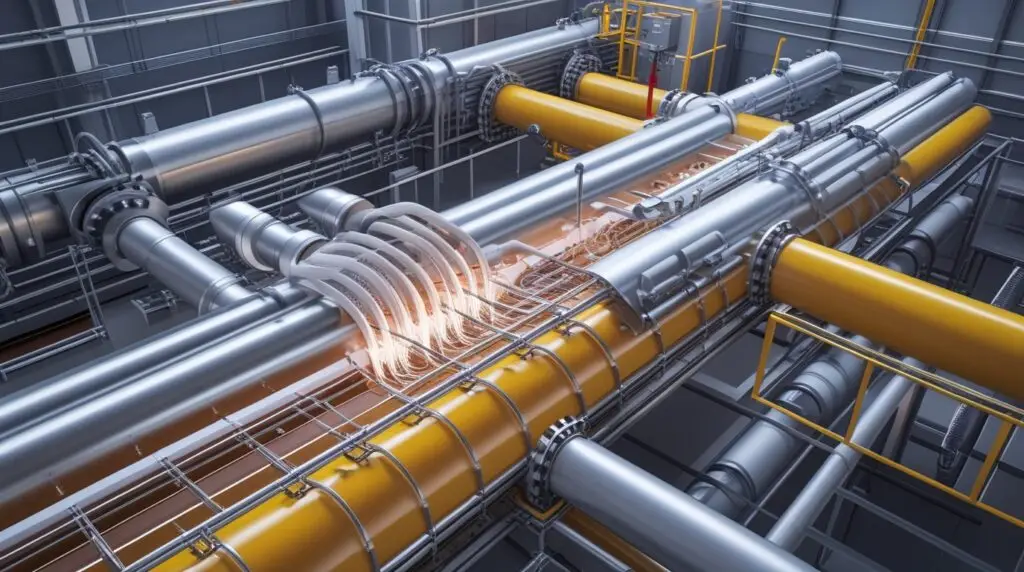
Two-phase heat transfer plays a critical role in maintaining system efficiency and longevity. In such systems, heat transfer depends on several key parameters:
1. Flow Patterns and Behavior
The pipeline may exhibit bubbly, slug, churn, or annular flow patterns, each with unique heat transfer properties. Understanding these regimes allows engineers to optimize energy transfer and minimize losses.
2. Thermodynamic and Operating Conditions
Temperature, pressure, and phase composition greatly influence heat transfer rates and fluid stability. Proper system calibration ensures consistent performance under fluctuating conditions.
3. Material Selection
Choosing high-conductivity, corrosion-resistant materials is essential for efficient heat transfer and system durability. Stainless steel and composite materials often provide the ideal balance between strength and performance.
4. Design Considerations for Efficiency
Pipe diameter, internal surface roughness, and insulation directly impact energy utilization. Optimized design ensures reduced turbulence, minimal energy loss, and maximum operational reliability.
Key Challenges in Two-Phase Piping Design
Designing an efficient two-phase pipeline system involves overcoming several challenges that can affect both performance and safety:
- Flow Instabilities: Unsteady flow can cause pressure fluctuations and operational inefficiencies.
- Pressure Drop: High pressure losses reduce throughput and energy efficiency.
- Erosion and Corrosion: Continuous phase interaction can deteriorate pipeline materials over time.
- Liquid Hold-Up: Unintended fluid accumulation can block sections of the pipeline.
- Slug Flow Management: Slug flow can lead to mechanical stress and damage pipeline integrity.
At Mettler Design, our engineers address these challenges through predictive modeling, advanced simulation, and meticulous design optimization.
Optimizations in the Construction of Two-Phase Flow Piping Systems
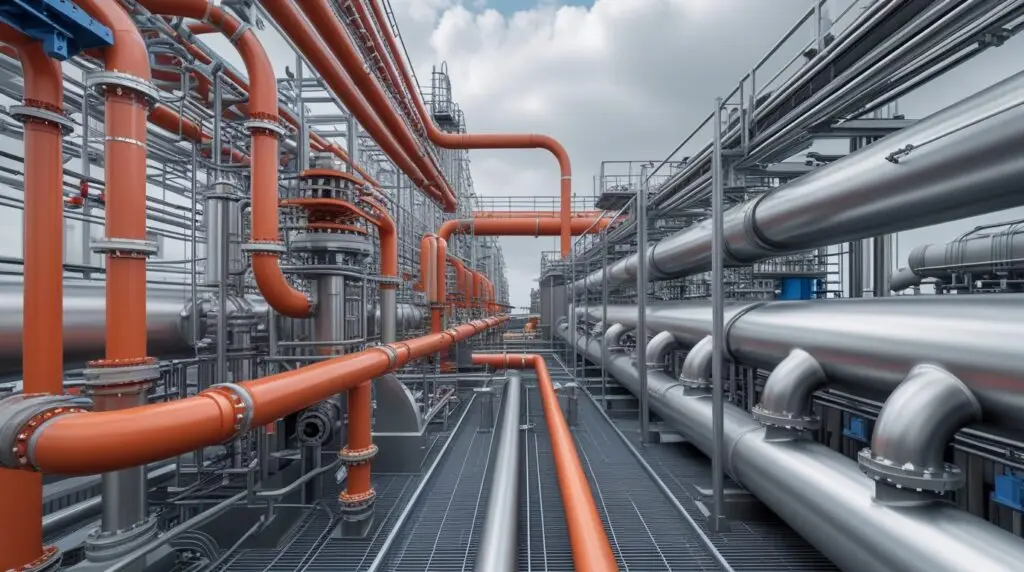
1. Accurate Flow Modeling with CAD and CFD
Using Computational Fluid Dynamics (CFD) and CAD modeling, engineers can simulate real-world conditions to predict flow behavior, pressure drops, and heat transfer characteristics. This data-driven approach allows Mettler Design to create systems that are both efficient and reliable.
2. Optimized Pipe Sizing and Layout
Proper pipe sizing ensures sufficient flow capacity with minimal pressure loss. Smooth layouts with minimal curvature and diameter variation help reduce turbulence and prevent material degradation.
3. Strategic Material Selection
Depending on temperature, pressure, and fluid type, materials such as stainless steel, carbon steel, or advanced composites are used to ensure long-term durability and thermal performance.
4. Safety and Monitoring Features
Safety is integral to every pipeline design. Mettler Design integrates relief valves, pressure and temperature sensors, and automated flow monitoring systems to maintain operational stability and safety compliance.
5. Integration of Advanced CAD Design Systems
Modern CAD tools allow for complete visualization and cross-team collaboration during the early design phase. This ensures that all stakeholders can review, refine, and optimize the pipeline system before construction, minimizing errors and delays.
The Role of Piping Engineers in Two-Phase Flow Design
Piping engineers are at the heart of two-phase flow system optimization. Their responsibilities include:
- System Analysis: Assessing fluid dynamics and identifying design limitations.
- Design Optimization: Enhancing layout for reduced energy loss and improved efficiency.
- Drafting and Documentation: Preparing detailed design drawings and specifications.
- Performance Testing: Conducting simulations and validation tests to ensure compliance and reliability.
Mettler Design’s team of expert piping engineers combines industry experience with technological innovation to deliver tailored, high-quality solutions.
Applications in the Oil and Gas Industry
Two-phase pipeline systems play an essential role in all stages of oil and gas operations, including:
- Upstream: Transporting crude oil and natural gas from wells to processing facilities.
- Midstream: Moving hydrocarbons through pipelines and storage networks.
- Downstream: Delivering refined products like gasoline and diesel to consumers.
With efficient pipeline design for two-phase flow systems, Mettler Design helps clients enhance reactor performance, reduce downtime, and improve overall operational safety.
Why Choose Mettler Design for Two-Phase Flow Piping Solutions
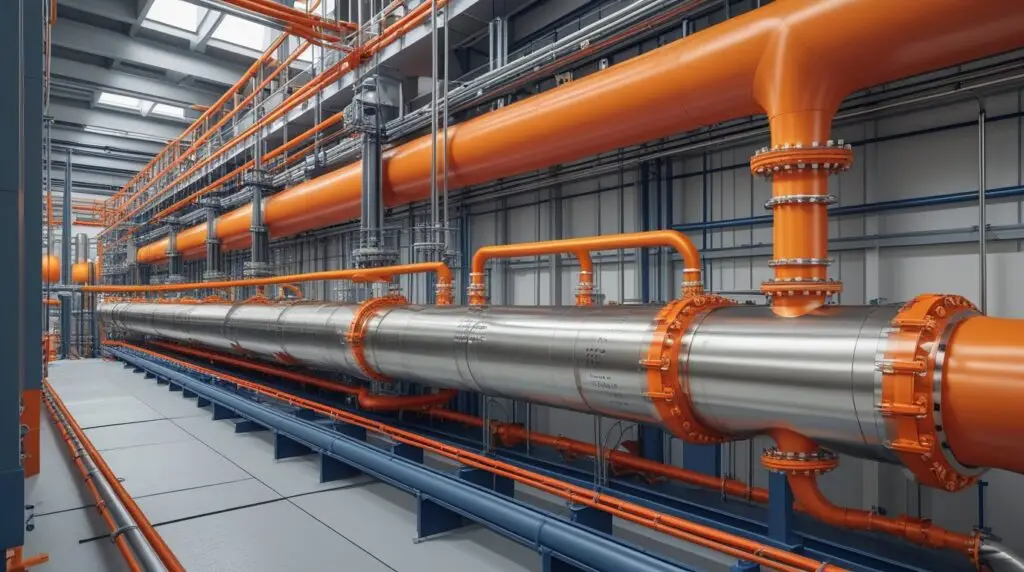
When it comes to efficient pipeline design for two-phase flow systems, Mettler Design stands out for:
- Comprehensive Expertise: Our team includes skilled piping engineers, CAD specialists, and thermodynamic experts.
- Advanced Technology: We utilize CFD simulations, 3D CAD models, and digital twins for precision engineering.
- Commitment to Quality: Our designs meet international standards for safety, performance, and durability.
- Client-Centric Approach: We partner closely with clients to deliver customized, results-driven solutions.
Conclusion
Efficient pipeline design for two-phase flow systems requires a combination of engineering expertise, advanced modeling tools, and precision material selection. At Mettler Design, we deliver end-to-end solutions that ensure maximum efficiency, minimal downtime, and enhanced safety for complex fluid transport systems.
If you’re seeking innovative and reliable piping design solutions, contact Mettler Design today. Our team is ready to help you achieve engineering excellence in your next pipeline project.
