

Industrial design is an ecosystem in itself and Topology optimization in sustainable industrial design is important. When an organization looks to build products in the near future, it needs to take certain vital parameters into account. From labor cost and manufacturing time to the environmental impact and suitability of the components used. The design needs to be carried out meticulously to address each issue.
In 2025, the whole concept of design will focus on how to build green and cost-effective products using the latest sustainable engineering design methods. Topology optimization is one such method that uses computer simulations to assist industrial designers in shaping their products to use minimal amount of raw materials.
To support the requirement of a future-ready product development cycle, Mettler Design employs various value-added tactics to increase our design services’ effectiveness, utility, and efficiency to deliver what the customers expect, need, and want.
In this article, we talk about the several facets of topology optimization and how it will help shape the future of industrial design.
Topology Optimization in Sustainable Industrial Design
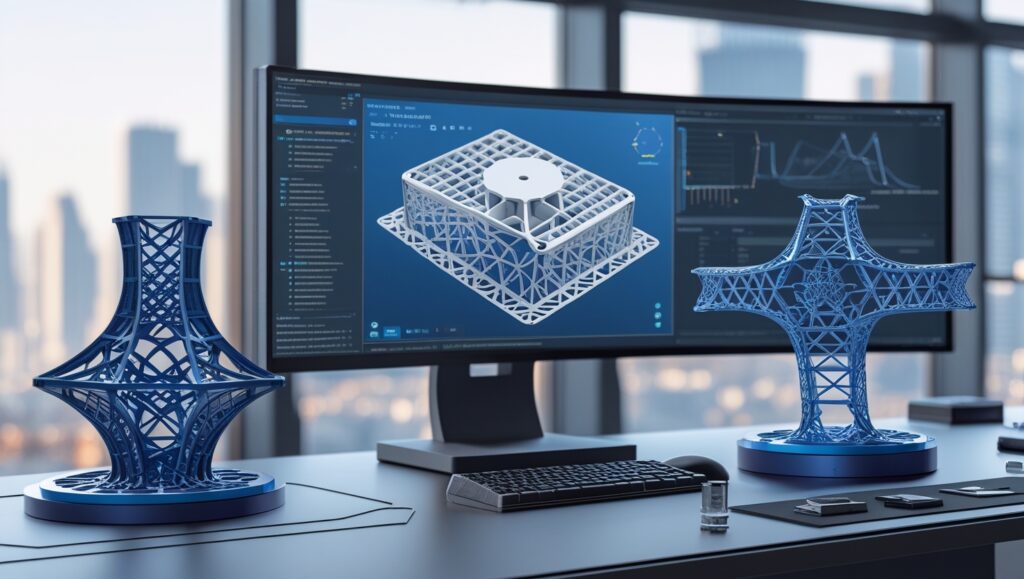
When companies are faced with pressures to reduce carbon footprints, operating costs, and energy usage, an expert in product design engineering needs to take the wheel and develop a value proposition.
Topology optimization is an engineering-driven computational method that enables designers to figure out the minimum usage of raw materials without compromising the structural strength.
For the industrial design professional, topology optimization is the bridge to creating innovative and environmentally friendly products that are well-shaped and address 2025’s value metrics in the market.
The optimization method is finding increased demand in multiple industries, with examples spanning across the consumer electronics, automotive, and medical technology segments.
Designers leverage topology optimization to assist in making complex shape designs that have custom-shaped solids, hollow sections, edges, and surfaces aimed at using fewer resources when it comes to the actual product build.
Definition of Topology Optimization
Topology optimization, or structural topology optimization, is a design workflow in the process of engineering a component by finding the right balance between material distribution and solid geometry. The method is known for using computer simulations to eliminate excess material without affecting the end performance.
In other words, topology optimization is the complete process of tweaking the design of an object until its structure uses the smallest number of raw materials possible, all the while not affecting the basic structural functionality.
Topology optimization is used where a large focus is given to weight minimization, cost effectiveness, and reduced environmental impact. It is being implemented across industries such as:
Automotive
Topology optimization has played a crucial role in the mass adoption of electric vehicles and the lightweighting movement that we see in the automotive industry.
By reducing the weight of the parts of the vehicle, the fuel economy of conventional cars improves, and we see less dependency on fossil fuels.
Aerospace
Topology optimization plays a key role in the aviation industry as the airplane structure is heavily focused on reducing the overall weight of the vehicle, thereby also affecting the fuel and power.
Consumer Electronics and Other Product Industries
Topology optimization helps consumer products industries by using less material during manufacturing, resulting in products that are less expensive as well as environmentally friendly.
Material Efficiency
Topology optimization helps reduce the overall raw material usage of the final product by an impressive margin of 30 to 60 percent, depending on the nature of the product and manufacturing technology involved. This also has a positive impact on a key factor for end customers, such as emissions and resource wastage. In many cases, this has a direct impact on cost efficiency for the manufacturer and the end buyer.
Energy Reduction
Topology optimization in industrial design also helps to design products that require minimal energy during transit or operation. This ensures a cleaner environment with lower levels of pollution caused by these products.
Cost Reduction
Topology optimization can significantly help designers in minimizing the manufacturing costs. For companies that need to source expensive and rare raw materials, topology optimization serves as a great opportunity for effective cost-cutting.
Adoption of Eco-trends
Sustainability is becoming a common trend among various industries, and the adoption of new technology and innovation, such as topology optimization, plays a key role in helping industrial design companies meet their end goals.
Case Studies of Topology Optimization
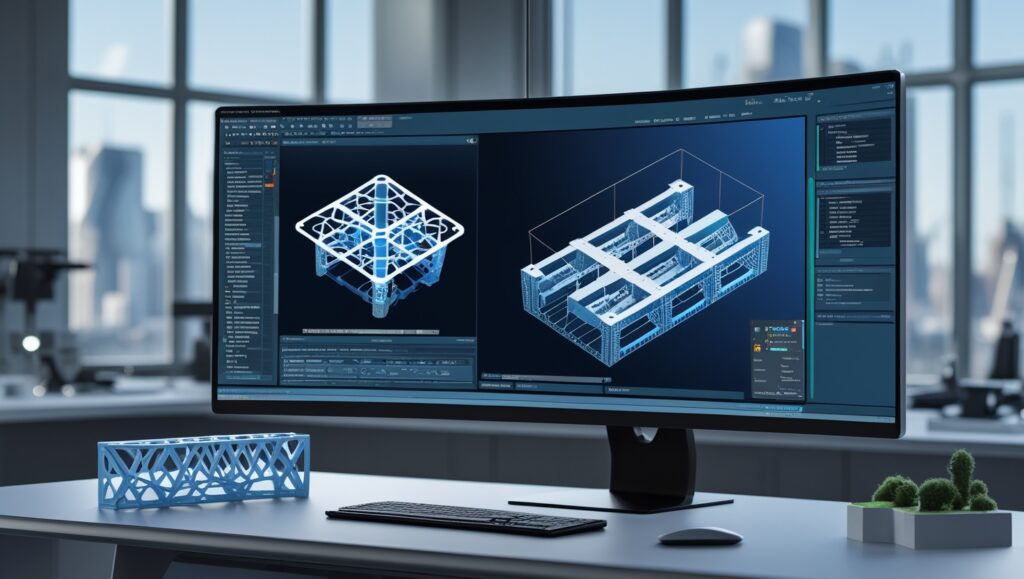
Topology optimization is not a new process, and many industrial companies across the world are increasingly employing it in their production cycles.
A notable example is Airbus, which has successfully used topology optimization to redesign and revolutionize aircraft cabin partitions, leading to a whopping 45 percent weight reduction.
With material wastage being reduced in the production of the cabin partitions, the aircraft manufacturers could improve aircraft performance.
Applications of Topology Optimization
CAD platforms are helping enable topology optimization methods for designers with easy-to-use software platforms. They help design professionals conduct analysis, simulations, and structural optimization all under one roof and in a single platform.
Generative Design
Generative design uses AI algorithms to process user-defined criteria and constraints to return multiple design options for industrial designers to choose the right shape, geometry, and dimension.
This design works with CAD software to provide a more iterative methodology to build better, more environmentally friendly products.
Topology Optimization: Challenges and Limitations
Topology Optimization in sustainable industrial design has evolved and has a major influence on the design and manufacturing of different parts. The use of generative design and 3D printing is making this field grow rapidly.
With that said, there are a few challenges that the industrial design industry faces with topology optimization, some of which are listed below:
Fabrication
Topology optimization shapes the product to an extent that the components become complex, and as a result, it becomes difficult for the product to be built using conventional methods such as injection molding or die cutting.
Financial Investment
The software that supports topology optimization is costly, and as a result, the process is very expensive. The companies that can’t afford these high-end software tend to stay behind in a world that is increasingly growing fast-paced in terms of competition.
Training
Designers who are used to manually carrying out industrial design processes will have to go through training to get used to the results that are being generated using topology optimization, which often seems too complex for a human eye to comprehend at times.
The Future of Topology Optimization
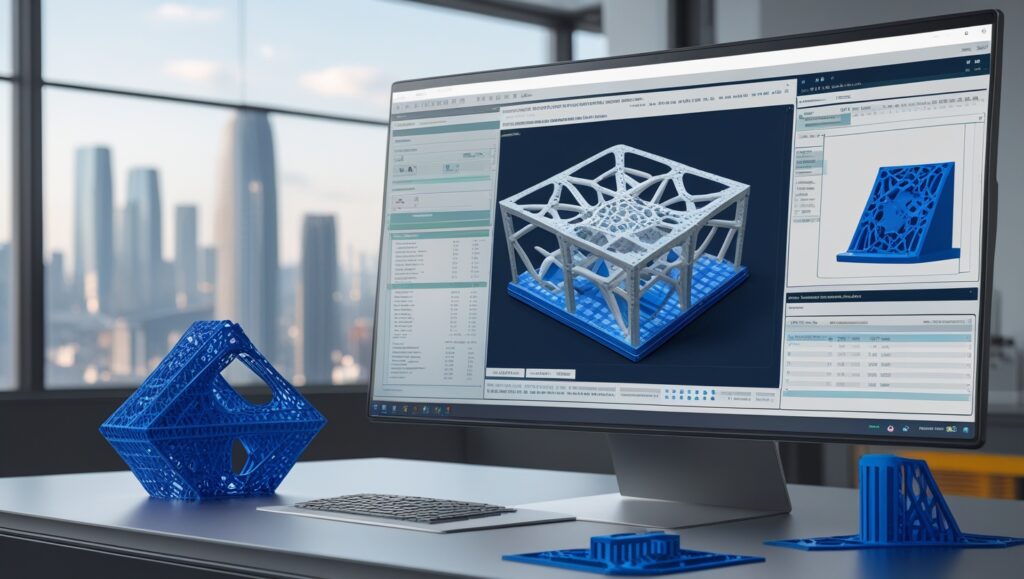
As per industrial predictions and market analysis, the use of topology optimization and its integration with the conventional design workflows is predicted to increase significantly, making this the new norm.
The inclusion of topology optimization methods in the product design engineering field is one major way companies are shaping the way we look at modern products and how they will evolve with time.
Conclusion
The most common way we will see topology optimization in 2025 will be in design itself, making 3D printing and AI-based generative design techniques common.
The future of industrial design is rapidly changing, and it is topology optimization and its subset of technologies that are setting the wheels of change in motion.
