
The automotive industry is in overdrive, transforming at an unprecedented pace. Electric vehicles (EVs), rigorous quality demands, and a persistent labor shortage are reshaping how cars are built. To stay ahead, manufacturers are increasingly turning to automation – a critical tool for maintaining competitiveness, boosting efficiency, minimizing errors, and consistently meeting stringent quality standards.
At Mettler Design, we understand these shifts. This article will explore how automation is impacting the automotive industry, the unique challenges it presents, the leading technologies, and the tangible financial benefits you can expect. If you’re a plant manager, engineer, or executive seeking to integrate industrial automation services into your automotive plant, consider this your practical guide.
Why Automotive Automation Isn’t Optional Anymore
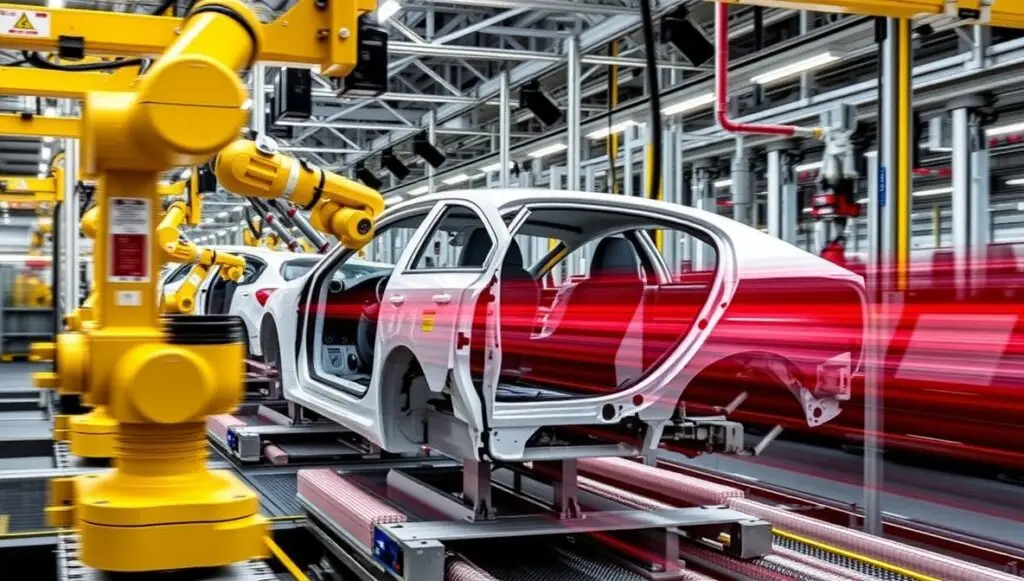
The automotive sector leads globally in industrial robot adoption, a clear indicator of how deeply automation is integrated into every manufacturing stage – from BiW welding and painting to parts assembly and final inspection. In fact, BMW now automates 95% of its body-in-white production, enabling efficient production of both internal combustion engine (ICE) and EV models on the same assembly line without a complete plant overhaul.
Several powerful forces drive this significant shift towards industrial automation:
- The Rise of Electric Vehicles: EVs demand new production lines with flexible setups, as battery packs and electric drivetrains differ significantly from traditional engines. Automation allows for rapid reconfiguration, avoiding expensive downtime.
- Complex Product Variations: Many manufacturers now produce multiple variants on the same line, including different models, trims, and custom features. Manual processes often struggle to maintain quality and speed, but automation ensures smooth operations.
- Labor Shortages: The manufacturing sector faces a widening gap in skilled workers. Deloitte projects over 2 million manufacturing jobs in the US alone may go unfilled by 2030. Automation effectively helps bridge this gap and reduces reliance on scarce labor.
- Legacy Systems: Many plants still operate with older equipment and PLCs not designed for today’s connected factory demands. Integrating new automation technologies with these legacy systems presents a key challenge.
- Meeting Quality Standards: Automotive manufacturing requires strict compliance with standards like IATF 16949, which mandates thorough traceability, documentation, and process controls. Automation systems consistently help meet such requirements with ease.
- Market Competitiveness: Automation now differentiates automotive manufacturers. As product cycles shorten and customization increases, companies depend on smart automation to adapt quickly, maintain quality, and control costs. Staying competitive today means having connected, flexible automated systems.
Top Automotive Automation Trends Transforming Plants in 2025
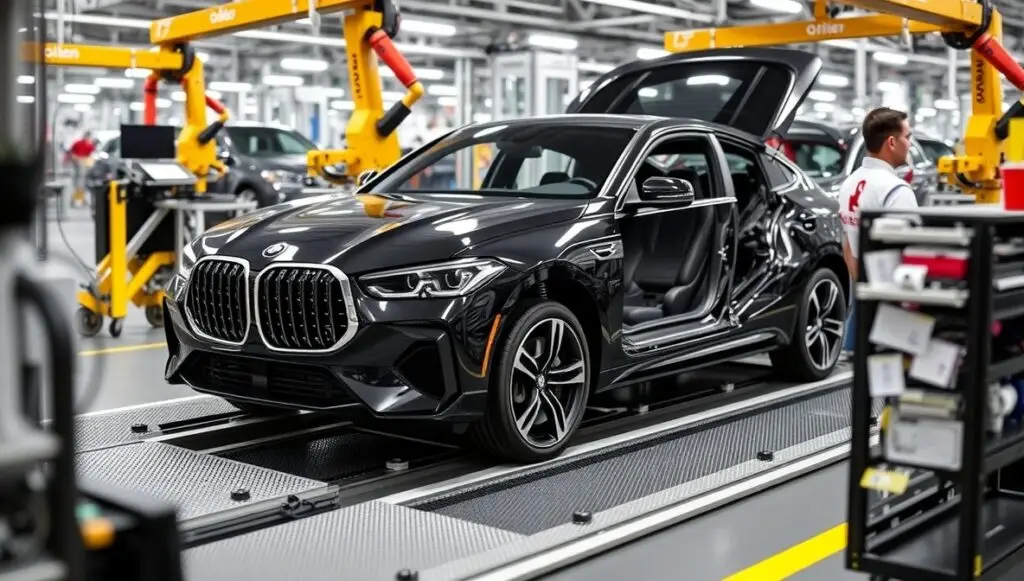
So, which technologies are driving this transformation? Here are six major automotive automation trends:
1. Collaborative Robots (Cobots)
Unlike traditional industrial robots, cobots safely work alongside human operators. They handle repetitive or physically demanding tasks such as welding and material handling, improving worker safety and reducing fatigue. This also helps manufacturers manage labor shortages without sacrificing productivity.
2. Edge Computing PLCs
In automotive manufacturing, rapid decision-making is paramount. Edge computing PLCs analyze data locally at the machine level, enabling immediate fault detection and faster responses. This aids in predictive maintenance and keeps downtime to a minimum, proving especially useful when plants manufacture both electric and combustion engine vehicles.
3. Modular and Integrated SCADA Systems
Modern automotive plants involve complex operations demanding seamless coordination. Today’s SCADA systems are flexible and easily connect with systems like MES (Manufacturing Execution Systems) and ERP (Enterprise Resource Planning). This provides managers with real-time visibility, allowing them to quickly identify issues and keep production on schedule.
4. Advanced Human-Machine Interfaces (HMIs)
User-friendly HMIs have become essential in automotive manufacturing. Intuitive touchscreens and clear displays reduce operator errors and shorten training time. Ultimately, this leads to more consistent product quality and less production downtime, meeting the industry’s high standards.
5. Robotic Simulation and Offline Programming
Halting an entire production line for changes can be costly. Robotic simulation allows engineers to create and test robot tasks in a virtual environment. Offline programming enables updates to these tasks without stopping the automotive assembly line, helping plants adapt swiftly to changes.
6. Energy-Efficient Automation
Energy consumption is a significant concern for manufacturers aiming to reduce costs and achieve sustainability goals. Automation systems designed for energy efficiency help lower power consumption without compromising performance, thereby achieving both environmental and financial objectives.
Avoiding Common Challenges: Ensuring Your Automotive Automation Project Succeeds
While automation in the automotive industry offers vast opportunities, it also presents real challenges. From outdated systems to training gaps, Mettler Design helps you navigate these six key areas:
- Upgrading Legacy Systems: Most plants still run on older PLCs and equipment. Replacing or retrofitting them isn’t always simple, and doing so without a solid plan can result in costly downtime. Plan ahead and map out how new automation will integrate with your current setup.
- Getting Your Systems to Talk: Your SCADA, MES, and ERP platforms must share data seamlessly. Otherwise, you’ll encounter delays, inaccurate data, or missed issues. Choosing systems that work well together is crucial for smooth operations and better decision-making.
- Training Your Team: New technology only works effectively if your people know how to use it. Ensure operators, technicians, and engineers receive proper training to build confidence and maximize your automation investment.
- Protecting Against Cyber Threats: Automation brings numerous connected devices, increasing risk. Protect both your IP and production uptime with layered, built-in security from the outset.
- Staying Flexible: Avoid getting locked into a single vendor. Open, modular systems allow you to grow and change as needed without being constrained by one supplier’s rules or pricing.
- Considering Outsourcing: Not every company has the time or internal team to handle everything in-house. Partnering with a trusted industrial automation service provider like Mettler Design for mechanical design, controls engineering, or system integration can accelerate your project and reduce risk.
The Real ROI of Automotive Automation: What You Can Expect Financially
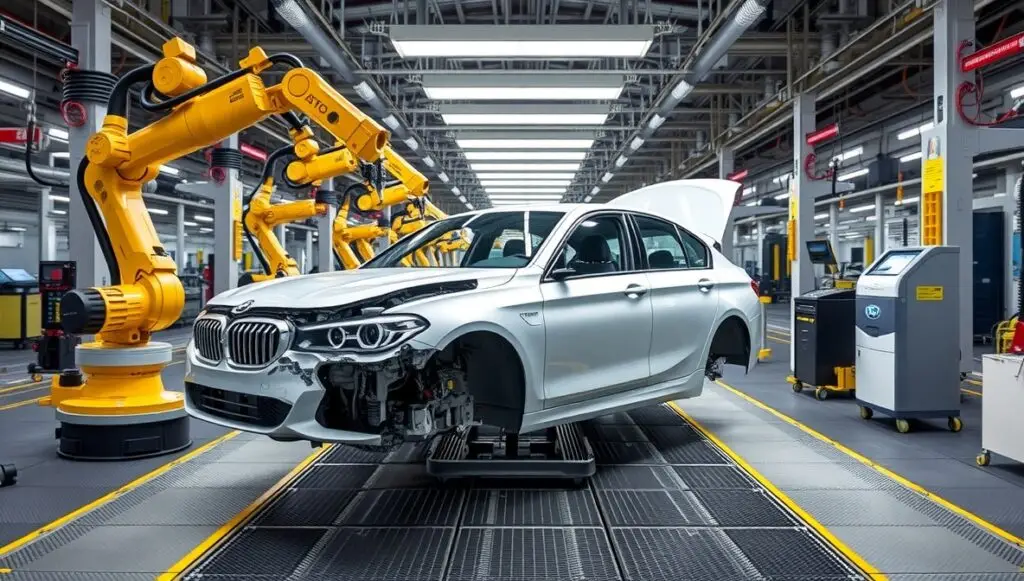
Automation is a smart investment. Here are some common benefits observed by automobile manufacturers:
- Reduced downtime: Plants report up to 27% less downtime after upgrading SCADA systems and implementing predictive maintenance.
- Improved efficiency: Overall Equipment Effectiveness (OEE) often increases by 20% or more with modern PLCs and robotics.
- Lower scrap rates: Automated inspections and vision systems reduce scrap by 30-35%, saving material costs and rework time.
According to Mitsubishi Solutions, manufacturers often experience a 40% ROI on automation investments, thanks to lower labor costs and increased efficiency.(Note: OEE (Overall Equipment Effectiveness) measures how well equipment performs, calculated by multiplying Availability, Performance, and Quality.)
Sustainability: How Automation Supports Green Manufacturing
Beyond cost savings, automation helps automobile manufacturing plants reduce their environmental footprint. Here’s how:
- Shorter machine cycles effectively cut down on energy use and reduce waste.
- Higher first-pass yields mean fewer defective parts, leading to less scrap in landfills.
- Improved material tracking facilitates reuse and recycling – crucial for circular economy efforts.
Many OEMs now include sustainability metrics in their automation KPIs, demonstrating that efficiency and environmental responsibility can go hand in hand.
How Mettler Design Helps You Win with Automotive Automation
At Mettler Design, we deeply understand the challenges of automotive manufacturing. Our comprehensive automation services help you improve efficiency, cut downtime, and keep production running smoothly.
Over the past decade, our team has worked across multiple industries, including automotive, and possesses the expertise to deliver results. Our solutions include:
- Mechanical design for conveyors, fixtures, and robot tooling, precisely tailored to your process.
- PLC programming for Siemens, Rockwell, Omron, and other platforms. Our code is optimized for speed, reliability, and safety.
- SCADA development that connects with your MES and ERP systems, providing real-time, plant-wide visibility and control.
- User-friendly HMI design that reduces training time and operator errors.
- Robotics simulation and offline programming to virtually test layouts and paths, helping you avoid expensive rework on the shop floor.
- Control panel and hardware design, engineered for clean integration, easy installation, and long-term reliability.
Whether you’re looking to upgrade a single line or automate your entire plant, Mettler Design is ready to support you with proven engineering expertise.
Ready to Improve Your Automotive Plant’s Efficiency with Smart Automation?
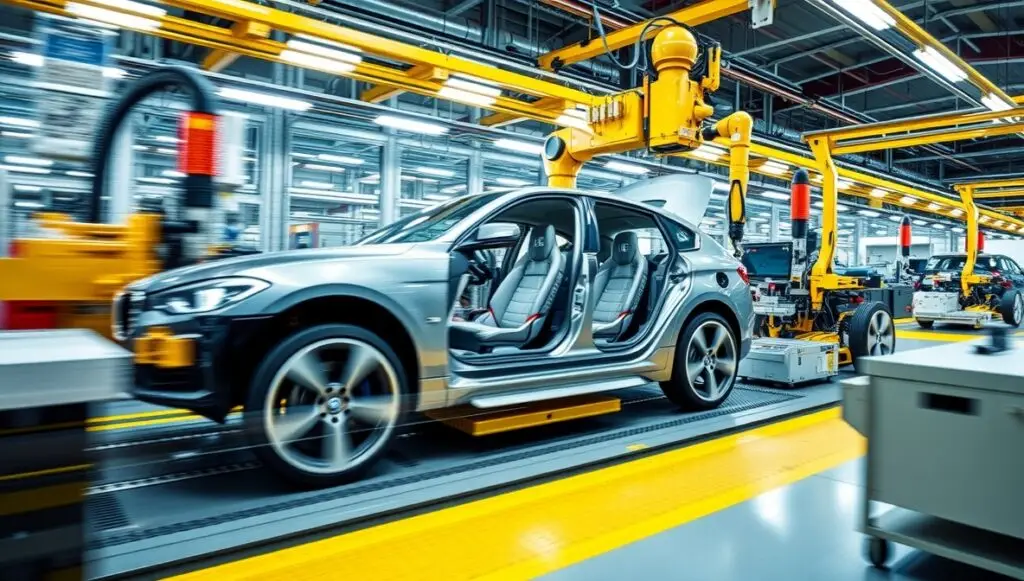
Start by automating a single production line, upgrading control systems, or testing with robot simulations. These steps will help you enhance efficiency and reduce downtime without major disruptions.
Ready to see how automotive automation can transform your manufacturing? Book a consultation with our senior engineers. We’ll assess your systems and recommend practical steps to increase ROI and maintain your competitive edge.
Let Mettler Design help take your automotive automation to the next level.
