
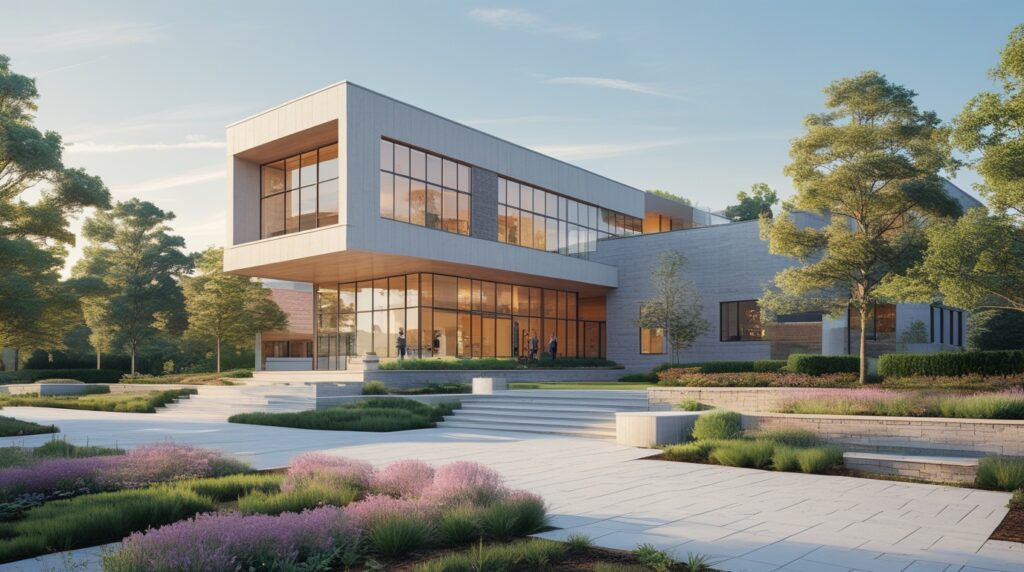
Designing a building goes far beyond sketching lines on paper. It demands thoughtful planning, strategic evolution, and precise coordination. At Mettler Design, architectural success begins with a structured approach—one that transforms ideas into functional, beautiful, and technically accurate spaces. Understanding the Architectural Design Phases helps clients stay informed while ensuring every decision leads to a high-quality final build.
Why Architectural Design Phases Matter
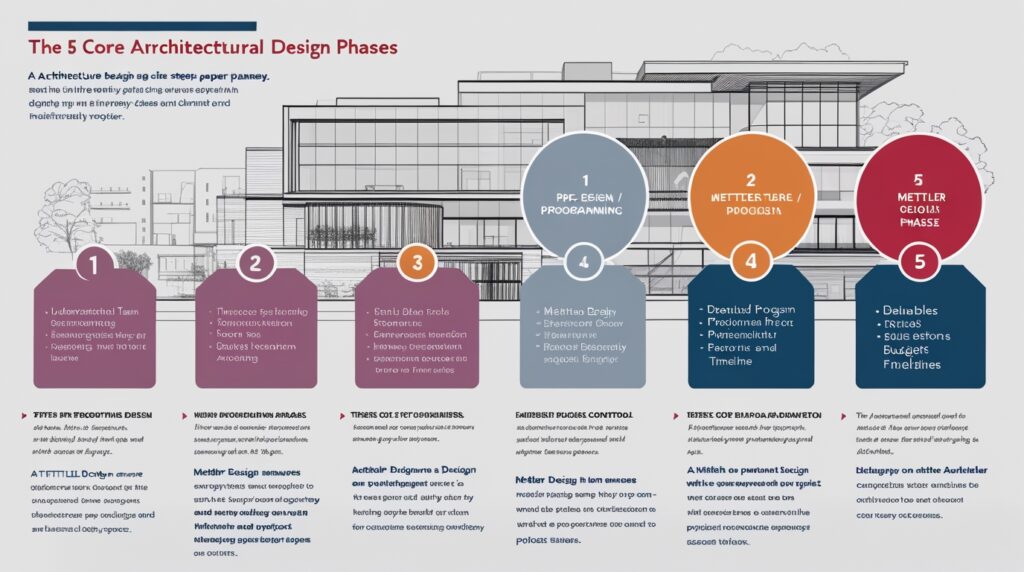
Because architecture is a step-by-step journey, each phase sets the foundation for the next. When these stages flow smoothly, projects experience fewer risks, fewer revisions, and significantly less rework. Moreover, these design phases:
- Enhance team coordination
- Provide a transparent roadmap
- Improve cost and timeline control
- Increase design accuracy through multiple review cycles
- Reduce construction delays and on-site issues
At Mettler Design, these checkpoints ensure every structure aligns with client goals and industry standards.
The 5 Core Architectural Design Phases
1. Pre-Design / Programming Phase
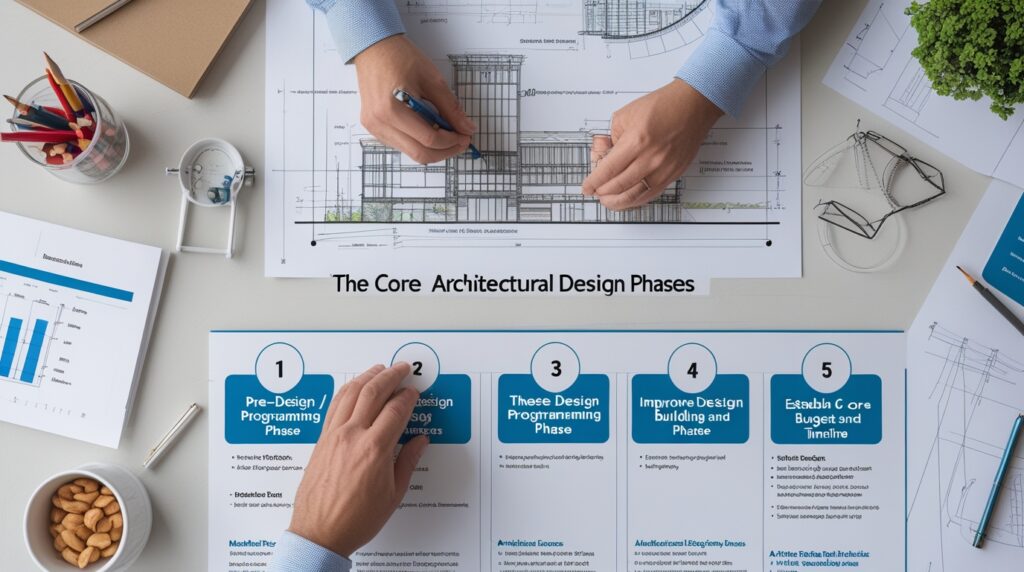
The first stage lays the foundation. During this phase, Mettler Design gathers essential project information to eliminate confusion later.
Objectives:
- Understand client goals, expectations, and vision
- Assess site constraints, zoning, and surroundings
- Establish core project parameters
Deliverables:
- Site surveys
- Detailed program brief
- Preliminary budget and timeline
This step ensures clarity from the very beginning.
2. Schematic Design (SD)
Next, the vision begins to take shape. Mettler Design transforms raw information into conceptual layouts and visuals.
Objectives:
- Explore design ideas
- Define basic layout, massing, and circulation
- Create early visual direction
Deliverables:
- Concept sketches
- Initial plans, elevations, and sections
- First-round 3D models
Clients finally see the first form of their future building.
3. Design Development (DD)
During DD, creativity merges with technical detail. This is where concepts evolve into precise architectural elements.
Objectives:
- Finalize accurate dimensions
- Coordinate structural, mechanical, and electrical systems
- Select materials and finishes
Deliverables:
- Detailed drawings and sections
- Material and finish schedules
- Updated, realistic 3D models
This stage ensures the design is both beautiful and buildable.
4. Construction Documents (CD)
In this phase, Mettler Design prepares the technical drawings contractors rely on for execution.
Objectives:
- Produce fully detailed, code-compliant plans
- Provide instructions for every construction step
- Coordinate all architectural, structural, and MEP details
Deliverables:
- Complete drawing set
- Technical specifications
- Final coordination sheets
These documents serve as the legal and instructional backbone of construction.
5. Bidding & Construction Administration
Once the design is complete, it’s time to build.
Bidding:
- Contractors evaluate drawings and submit proposals
- Mettler Design assists in selecting the best bid
Construction Administration:
- Site visits and quality checks
- Approvals of materials and shop drawings
- Ensuring construction aligns with the design intent
This phase guarantees that the final structure reflects the approved plans.
Additional Architectural Design Phases
Feasibility & Concept Validation
Before committing to full-scale design, many projects benefit from feasibility studies.
Objectives:
- Evaluate budget versus design expectations
- Review zoning, environment, and technical constraints
- Conduct risk assessments
Deliverables:
- Feasibility report
- Concept options
- Recommendation documents
This step helps clients make confident early decisions.
Post-Construction & Handover
A well-designed project ends with a smooth transition to occupancy.
Objectives:
- Inspect final work
- Confirm all systems function properly
- Provide maintenance and operation guidance
Deliverables:
- Final walkthrough report
- As-built drawings
- Warranty manuals
This final phase ensures long-term performance and client satisfaction.
Why Choosing the Right Partner Matters
While several firms offer design services, very few match the technical precision and structured approach required for SD, DD, and CD documentation. Companies like Milestone PLM Solutions support architects through detailed design packages that enhance project accuracy and coordination.
Conclusion
Every architectural project is a journey—from idea to concept, from technical detailing to final construction. By understanding the Architectural Design Phases, clients and teams collaborate more effectively and ensure a smoother, more predictable project outcome. With firms like Mettler Design, every stage becomes a clear, coordinated, and confidence-building step toward a successful architectural masterpiece.
